
Significance of Takbīr Tashrīq
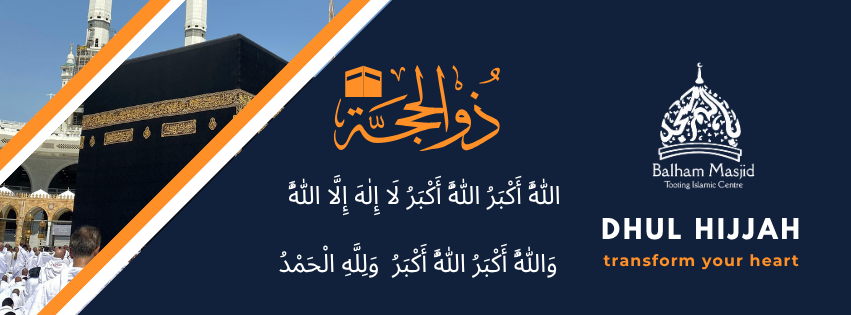
Takbīr Tashrīq is a special form of glorifying Allah recited during the days of Dhul-Hijjah, specifically from the Day of ʿArafah (9th), from Fajr until the 13th of Dhul-Hijjah until Asar (From Fajr on Tuesday 26 to Asar on Saturday 30 May 2026). It carries deep spiritual meaning and historical importance.
Glorifying Allah’s Greatness
The core message of Takbīr Tashrīq is:
- “Allāhu Akbar” (Allah is the Greatest)
It reminds us that:
- Allah is greater than our worries, desires, and worldly attachments
- True success lies in submitting to Him
This repetition strengthens tawḥīd (belief in the Oneness of Allah).
Connection to the Story of Prophet Ibrāhīm (AS)
Takbīr Tashrīq is closely linked to the events of Eid al-Adhā:
- Prophet Ibrāhīm (AS) was willing to sacrifice his son for Allah
- Allah replaced the sacrifice with a ram
The takbīr reflects:
- Complete obedience
- Faith over emotion
- Trust in Allah’s wisdom
A Practice Linked to Hajj
During these days:
- Pilgrims (ḥujjāj) are performing key rituals of Hajj
- Non-pilgrims join spiritually by reciting takbīr
- This creates a global unity of worship, where Muslims everywhere remember Allah together.
Reviving a Sunnah
Reciting Takbīr Tashrīq:
- Was practiced by the Companions (RA)
- Is a highly emphasised act after every farḍ ṣalāh
Reviving it:
- Keeps alive a beautiful Sunnah
- Earns reward for remembrance (dhikr)
Protection and Elevation
Frequent dhikr like takbīr:
- Cleanses the heart
- Increases spirituality
- Protects from heedlessness
- It fills your day with constant remembrance of Allah rather than distraction.
A Declaration of Gratitude
The phrase “wa lillāhi al-ḥamd” (and to Allah belongs all praise) teaches us to:
- Be grateful for provision
- Recognise blessings
- Acknowledge Allah in all outcomes
Allāhu akbar, Allāhu akbar, lā ilāha illa-llāh, wa Allāhu akbar, Allāhu akbar, wa lillāhi al-ḥamd.
Allah is the Greatest, Allah is the Greatest. There is no god but Allah. Allah is the Greatest, Allah is the Greatest, and to Allah belongs all praise.